Healing through Nature and Spirits
Shamanic healing is rooted in the understanding that all of life is interconnected and alive.
Humans, animals, landscapes, weather, and the spirit world are not seen as separate realms,
but as parts of a living, relational whole. When illness, distress, or imbalance arises,
it is understood as a disruption in relationship—within a person, between beings,
or between humans and the natural world.
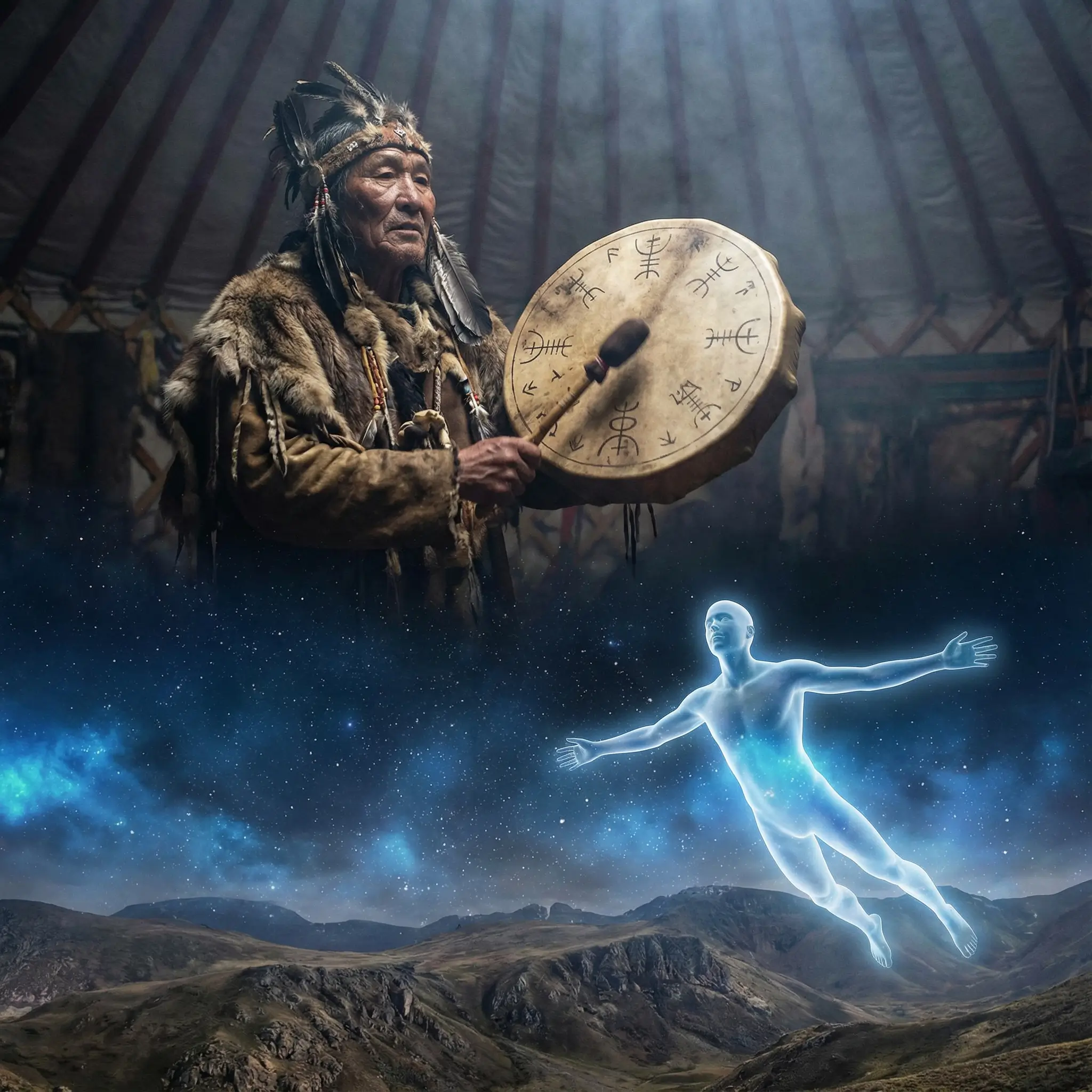
To address this, shamans enter non-ordinary states of awareness that allow them to perceive
and interact with the subtle dimensions of life. In these states, they communicate with spirit
allies such as ancestors, helping spirits, animal guides, and the intelligences of the land.
Through these relationships, the shaman receives insight and guidance on how balance can be restored.
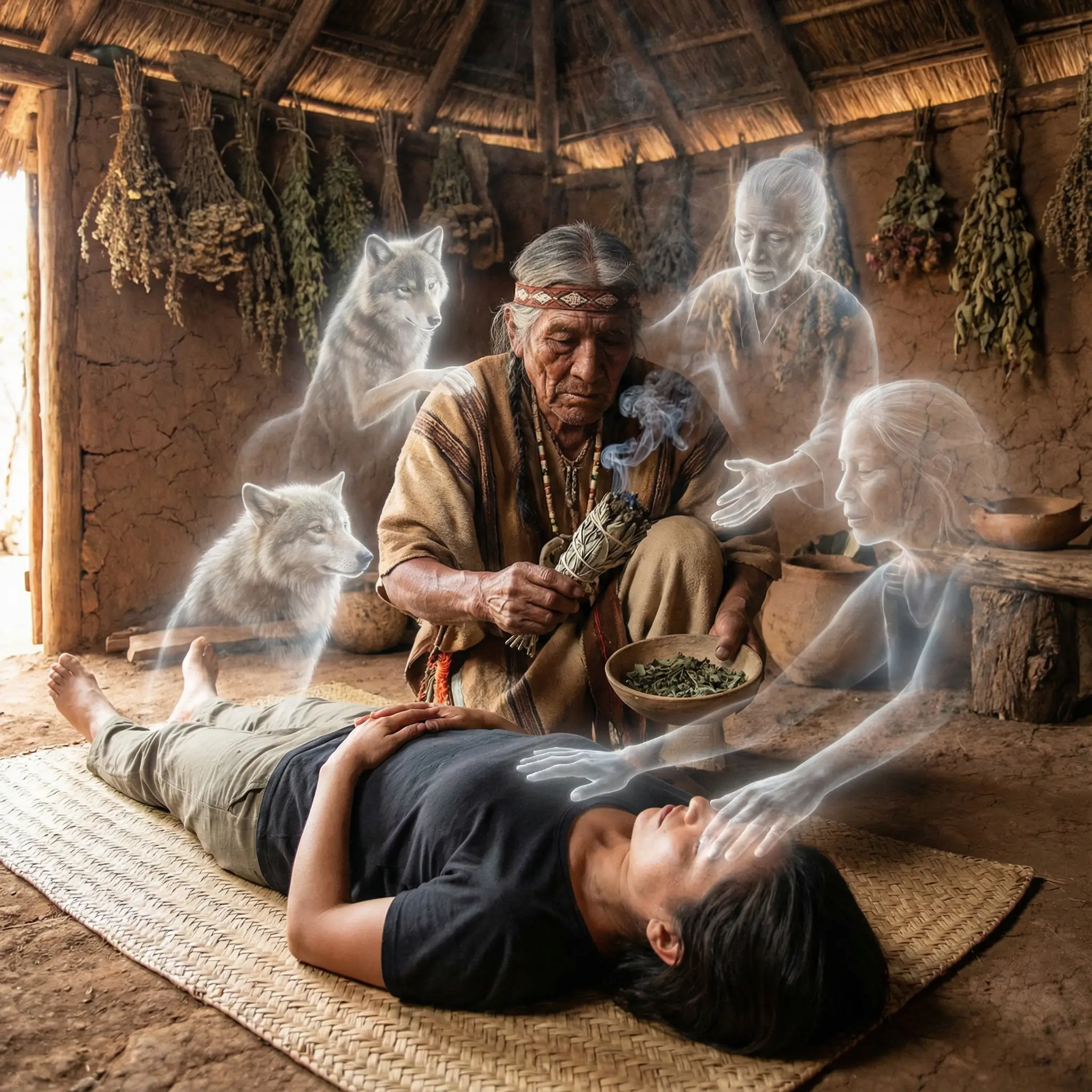
Healing work with people often focuses on strengthening the individual’s life force
and restoring inner coherence. Trauma, shock, or prolonged stress may be understood as causing
a loss of vitality or fragmentation of the soul. Through ceremonial practices,
the shaman helps retrieve what has been lost, clear what no longer belongs,
and re-establish harmony between body, emotions, mind, spirit, and environment.
The aim is not to impose healing, but to support the person’s natural capacity to return to wholeness.
Shamanic work also extends beyond humans.
Animals are approached as sentient beings with their own spiritual presence,
and healing may involve supporting their vitality, easing distress, or restoring balance
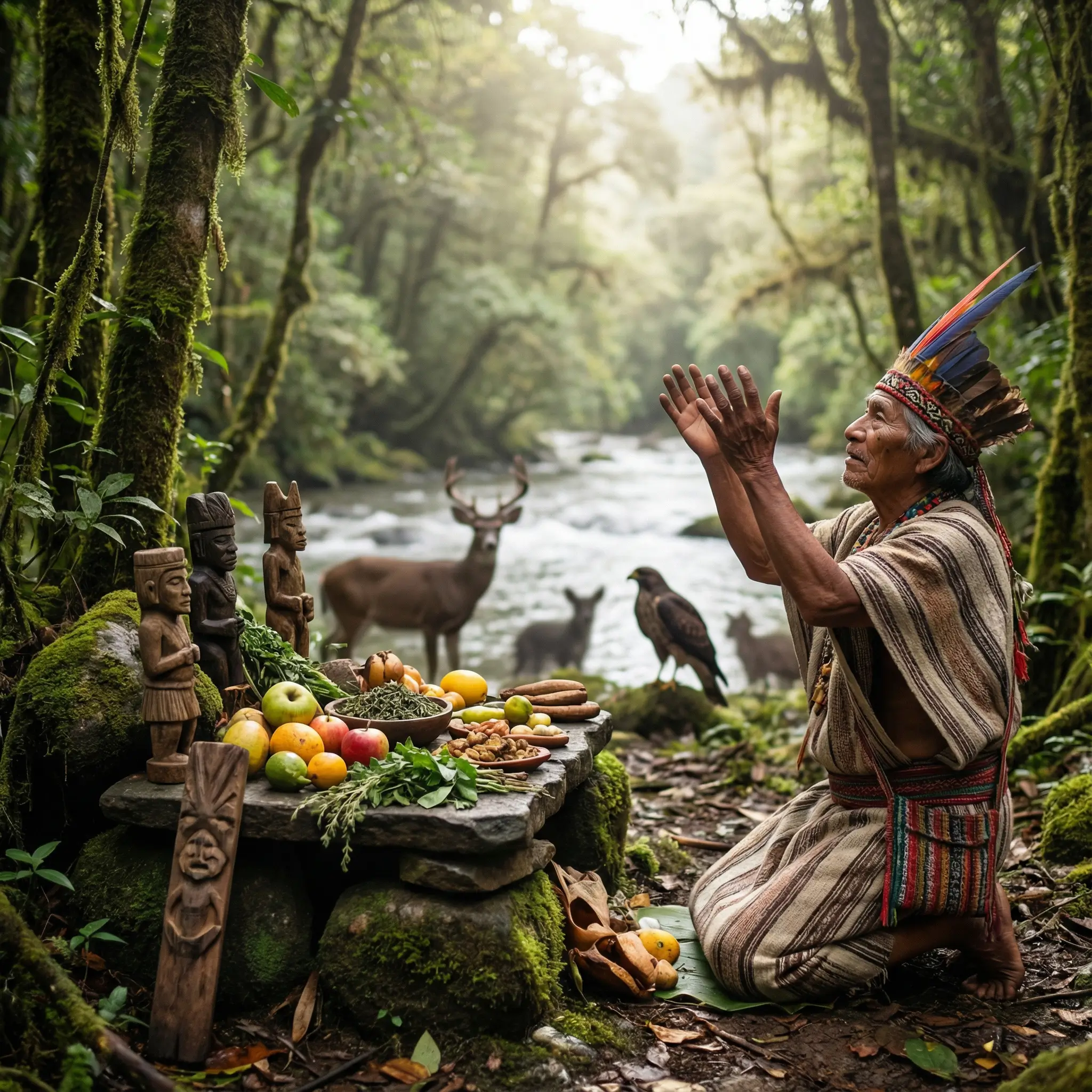
in their relationship with people or territory. In a similar way, places and landscapes
are understood to carry memory and spirit. Areas affected by trauma, neglect, or disruption
may be experienced as depleted or unsettled. Through ceremony, offerings, and dialogue with
the spirits of the land, shamans work to restore vitality and harmony to these places.
In some traditions, shamans also engage with the forces of weather and the elements.
This work is not about control, but about relationship and respectful communication.
By listening to and negotiating with the spirits of wind, rain, sun, and storms,
shamans seek to support balance in natural cycles—whether for agriculture, travel, ceremony,
or the well-being of a community.
At the heart of all shamanic practice is reciprocity.
Healing arises through listening, respect, and right relationship rather than domination or force.
The shaman serves as an intermediary between worlds, helping to reweave connections so that people,
animals, places, and the wider web of life can return to balance.
Healing med naturen og åndeverden
Sjamanistisk healing er forankret i forståelsen av at alt er sammenvevd og levende.
Mennesker, dyr, landskap, vær og åndeverdenen betraktes ikke som adskilte,
men som deler av en helhet. Når sykdom, uro eller ubalanse oppstår,
forstås det som et brudd i relasjor – enten i mennesket selv, mellom vesener,
eller mellom mennesker og naturen.
For å arbeide med dette går sjamanen inn i ikke-ordinære bevissthetstilstander som gjør det
mulig å sanse og samhandle med de mer subtile lagene av vår verden.
I disse tilstandene kommuniserer sjamanen med spirituelle hjelpere, som forfedre, kraftdyr, naturånder
og stedets intelligens. Gjennom disse relasjonene mottas innsikt og veiledning om hvordan balanse kan
gjenopprettes.
I arbeid med mennesker handler sjamanistisk healing ofte om å styrke livskraften
og gjenopprette indre balanse. Traumer, sjokk eller langvarig belastning kan forstås som tap
av vitalitet eller fragmentering av sjelen. Gjennom seremonielt arbeid støtter sjamanen en prosess
der det som er gått tapt kan hentes tilbake, det som ikke lenger hører til kan forløses,
og harmonien mellom kropp, følelser, sinn, sjel og omgivelser kan gjenopprettes.
Healing påtvinges ikke, men støtter menneskets egen evne til å vende tilbake til helhet og balanse.
Sjamanistisk arbeid omfatter også mer enn mennesker alene.
Dyr betraktes som sansende vesener med egen spirituell tilstedeværelse,
og healing kan innebære å støtte deres vitalitet, lindre uro eller gjenopprette balanse i
forholdet mellom dyr, mennesker og landskap. På samme måte forstås steder og landskap som
bærere av minne og livskraft. Områder som har vært utsatt for traumer, forsømmelse eller forstyrrelser
kan oppleves som tappet for energi eller i ubalanse. Gjennom ritualer, offerhandlinger og dialog
med stedets ånder arbeides det for å gjenopprette harmoni og flyt.
I noen tradisjoner arbeider sjamaner også med vær og elementkrefter.
Dette er ikke et forsøk på å kontrollere naturen, men et uttrykk for relasjon og respektfull kommunikasjon.
Ved å lytte til og forhandle med åndene knyttet til vind, regn, sol og storm,
søker sjamanen å støtte balanse i naturens sykluser –
til nytte for jordbruk, reiser, seremonier eller fellesskapets beste.
Kjernen i all sjamanistisk praksis er gjensidighet. Healing oppstår gjennom å lytte, respektere og
gjenopprettelse av fordelaktige relasjoner, snarere enn gjennom makt eller tvang.
Sjamanen fungerer som et bindeledd mellom verdener, og bidrar til å veve forbindelser på nytt
slik at mennesker, dyr, steder og det større livsvevet kan vende tilbake til balanse.