The Despacho
A sacred offering from the heart of the Andes
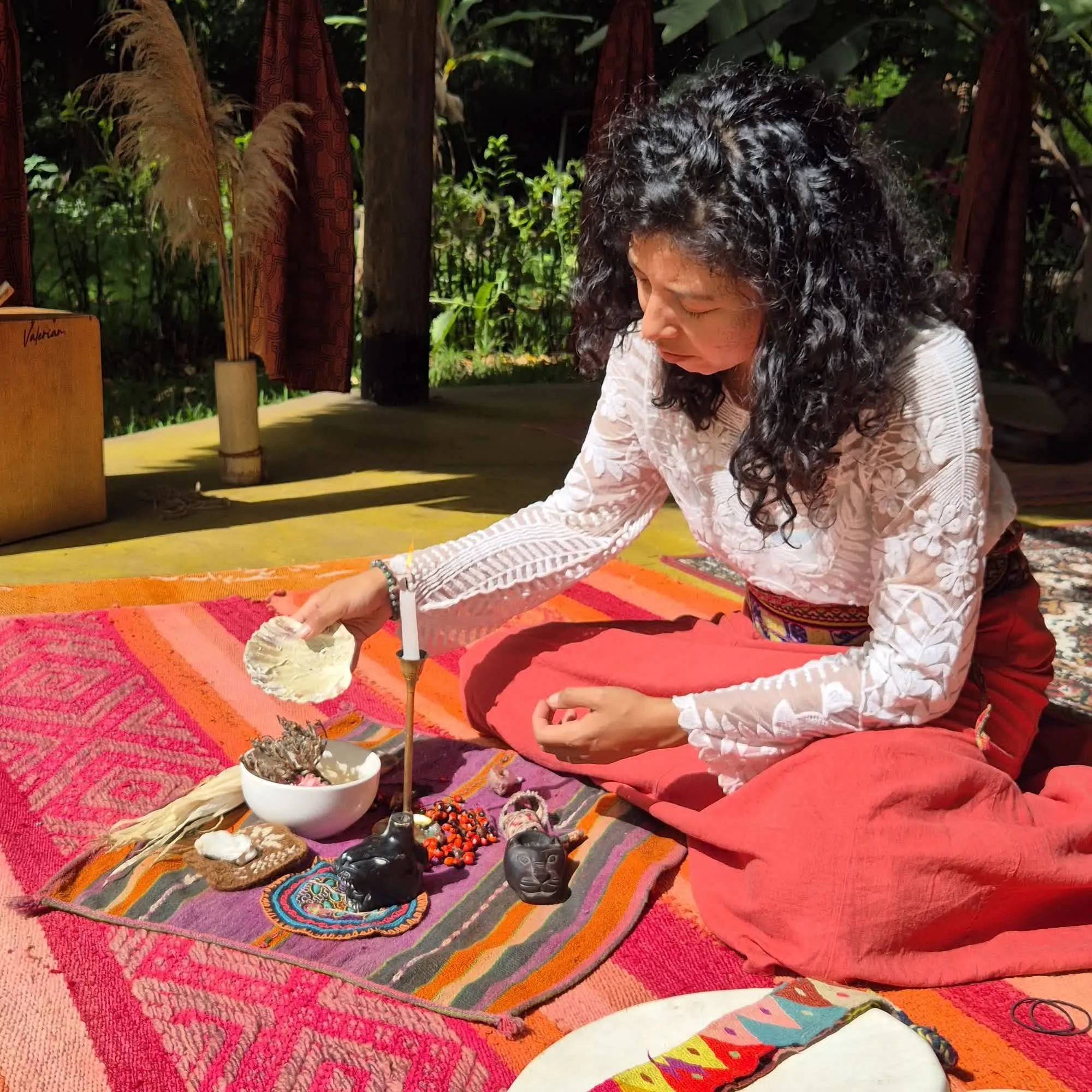
The despacho is a prayer bundle — a living offering assembled by hand, item by item, with intention and prayer.
The tradition comes from the Quechua speaking peoples of the Andean highlands of South America, where it has been practiced for thousands of years. At its heart is the principle of Ayni — reciprocity. We receive from the earth, from the elements, from the forces that sustain life. The despacho is how we give back. Not a petition. Not a request. An act of gratitude and exchange.
A completed despacho is dispatched to the spirit world — buried, burned or given to water — carrying everything placed into it back to the source.
Despacho
En hellig offergave fra hjertet av Andes
En despacho er en bønnebunt — en levende offergave satt sammen for hånd, gjenstand for gjenstand, med intensjon og bønn.
Tradisjonen stammer fra quechua-folket i høylandet i Andes, der den har vært praktisert i tusenvis av år. I kjernen ligger prinsippet om Ayni — gjensidighet. Vi mottar fra jorden, fra elementene, fra kreftene som bærer livet. En despacho er måten vi gir tilbake på. Ikke et ønske. Ikke en forespørsel. Ren takknemlighet og utveksling.
En ferdig despacho sendes til åndeverdenen — gravd ned, brent eller gitt til vannet — og bærer alt vi la i den tilbake til kilden.
What Happens in the Ceremony
The ceremony begins with the opening of sacred space — the directions called in, the intention set, the field prepared.
Then we build.
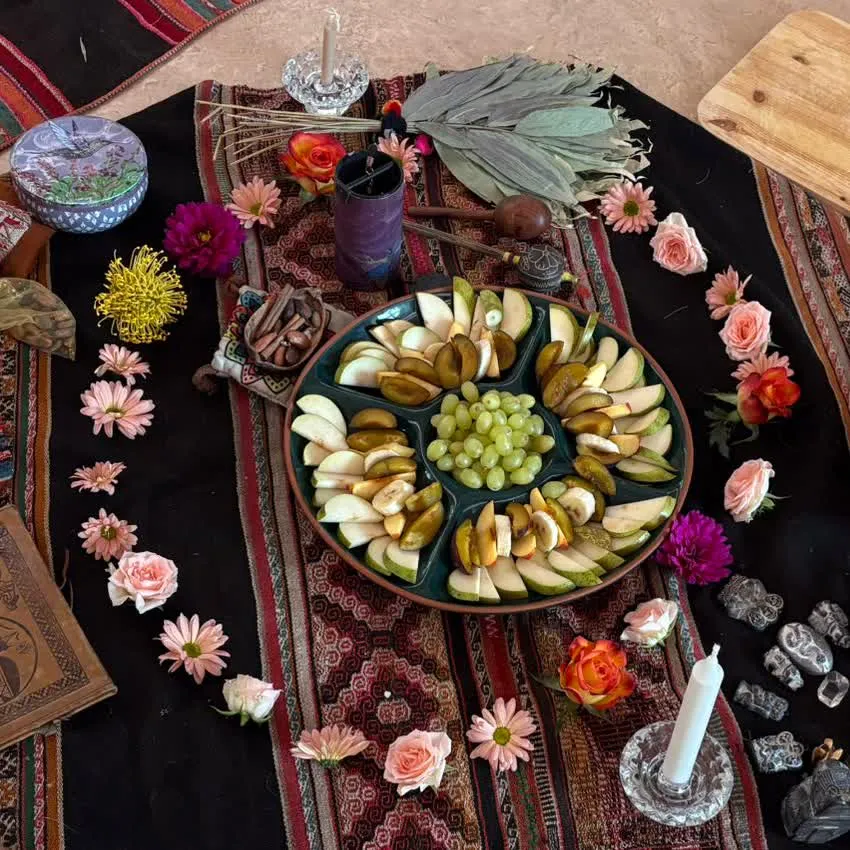
A large sheet of white paper is laid out as the base. One by one, items are placed into the bundle — flowers, seeds, food, natural materials, symbolic objects. Each one is held, breathed on, prayed over before it is placed. Nothing goes in without awareness. The assembly itself is the ceremony — slow, deliberate, collective.
When the bundle is complete it is folded and tied, sealing everything inside. The prayers, the intentions, the breath of everyone present — all of it held in what we made together.
Hva skjer i seremonien
Seremonien begynner med åpningen av hellig rom — retningene kalles inn, intensjonen settes, rommet gjøres klart.
Så bygger vi.
Et stort hvitt ark legges ut som grunnlag. En etter en plasseres gjenstander i bunten — blomster, frø, mat, naturmaterialer, symbolske objekter. Hver enkelt holdes, pustes på, bes over før den legges ned. Ingenting legges inn uten bevissthet. Selve byggingen er seremonien — langsom, bevisst, kollektiv.
Når bunten er ferdig, brettes den sammen og bindes. Alt forsegles inni — bønnene, intensjonene, pusten til alle som var til stede. Alt holdt i det vi skapte sammen.
How We Use It
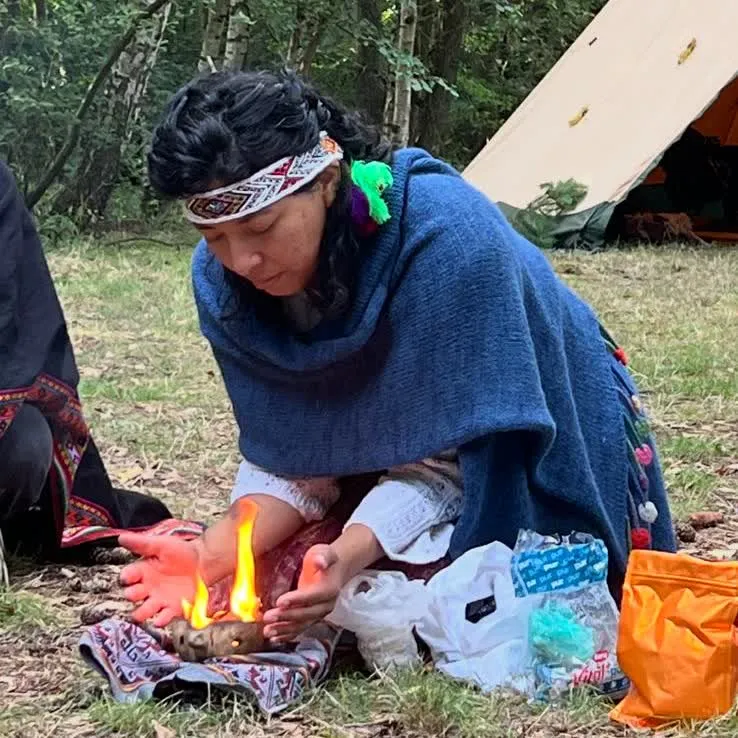
In our ceremonies the despacho is built around a specific element or intention. What goes into the bundle and how it is dispatched depends on what the ceremony is working with.
Earth offerings are buried — planted in the ground to take root and grow.
Water offerings are released — given to a river, a lake or the sea to be carried away.
Fire offerings are burned — consumed by the flame and carried upward as smoke.
In each case the dispatch is not the end of the ceremony. It is the completion of it — the moment the offering leaves our hands and is received.
Hvordan vi bruker den
I våre seremonier bygges despachoen rundt et bestemt element eller en intensjon. Hva som legges i bunten og hvordan den sendes av sted avhenger av hva seremonien handler om.
Jord-offergaver graves ned — plantet i bakken for å slå rot og vokse.
Vann-offergaver gis til vannet — en elv, en innsjø eller havet bærer dem videre.
Ild-offergaver brennes — fortært av flammen og båret oppover som røyk.
Avsendelsen er ikke slutten på seremonien. Den er fullføringen — øyeblikket offergaven forlater hendene våre og blir mottatt.
What to Bring
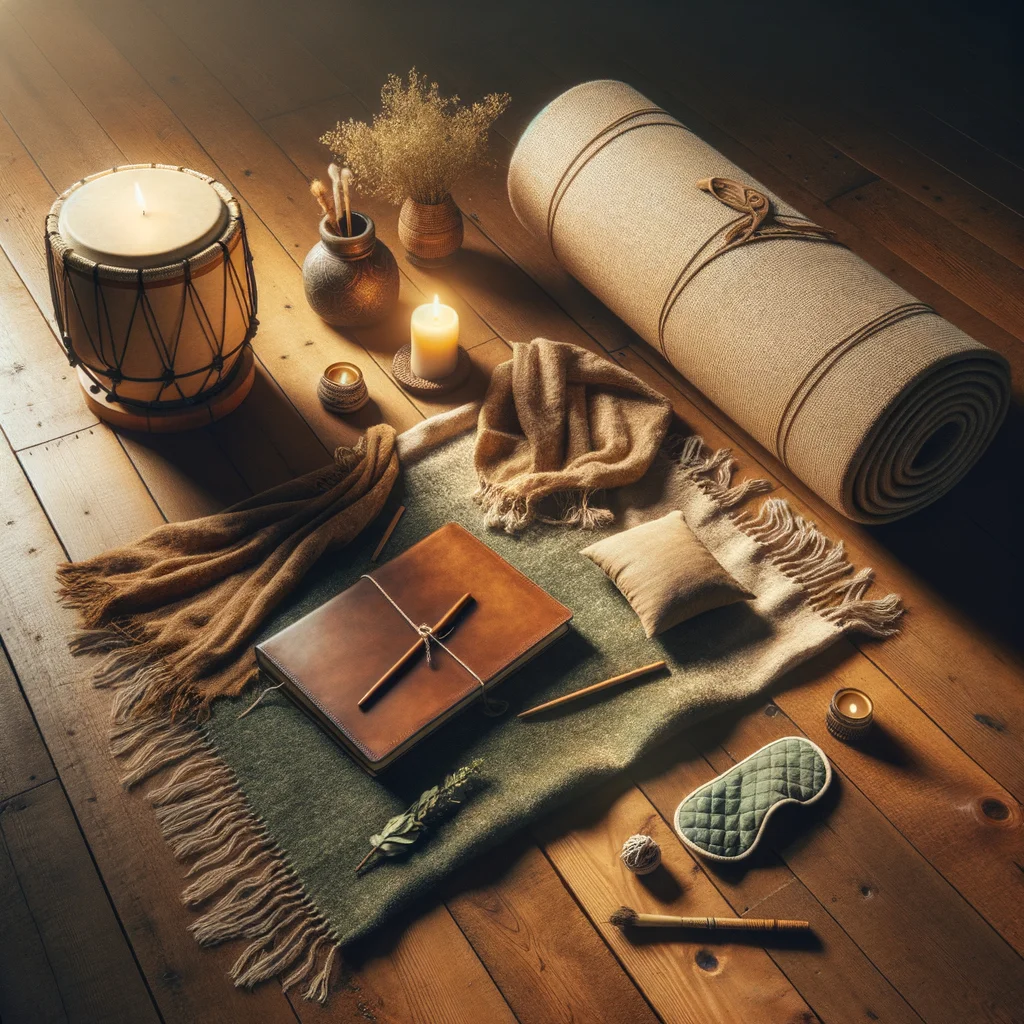
Indoor ceremonies
- A yoga mat or sitting pad
- A meditation cushion or folded blanket to sit on
- One or two blankets for warmth
- Comfortable, loose clothing
- A personal object of significance for the offering — optional
Outdoor ceremonies
We work outside regardless of weather. Come prepared.
- Something waterproof to sit on — a tarp, a bin bag, a sit pad
- A blanket or sleeping pad for comfort on the ground
- Warm layers — it gets cold sitting still outdoors, even in April
- Rain gear if the forecast calls for it
- Water and a thermos with something warm to drink
- Comfortable clothing you don't mind getting dirty
- A personal object of significance for the offering — optional
Ta med
Innendørs seremonier
- Yogamatte eller sittepute
- Meditasjonspute eller foldet teppe å sitte på
- Ett eller to tepper for varmen
- Komfortable, løse klær
- En personlig gjenstand til offergaven — valgfritt
Utendørs seremonier
Vi jobber ute uansett vær. Kom forberedt.
- Noe vanntett å sitte på — en presenning, en søppelsekk, et sitteunderlag
- Et teppe eller liggeunderlag for komfort på bakken
- Varme lag — det blir kaldt å sitte stille ute, selv i april
- Regnklær hvis det er meldt nedbør
- Vann og en termos med noe varmt å drikke
- Komfortable klær du ikke er redd for å skitne til
- En personlig gjenstand til offergaven — valgfritt
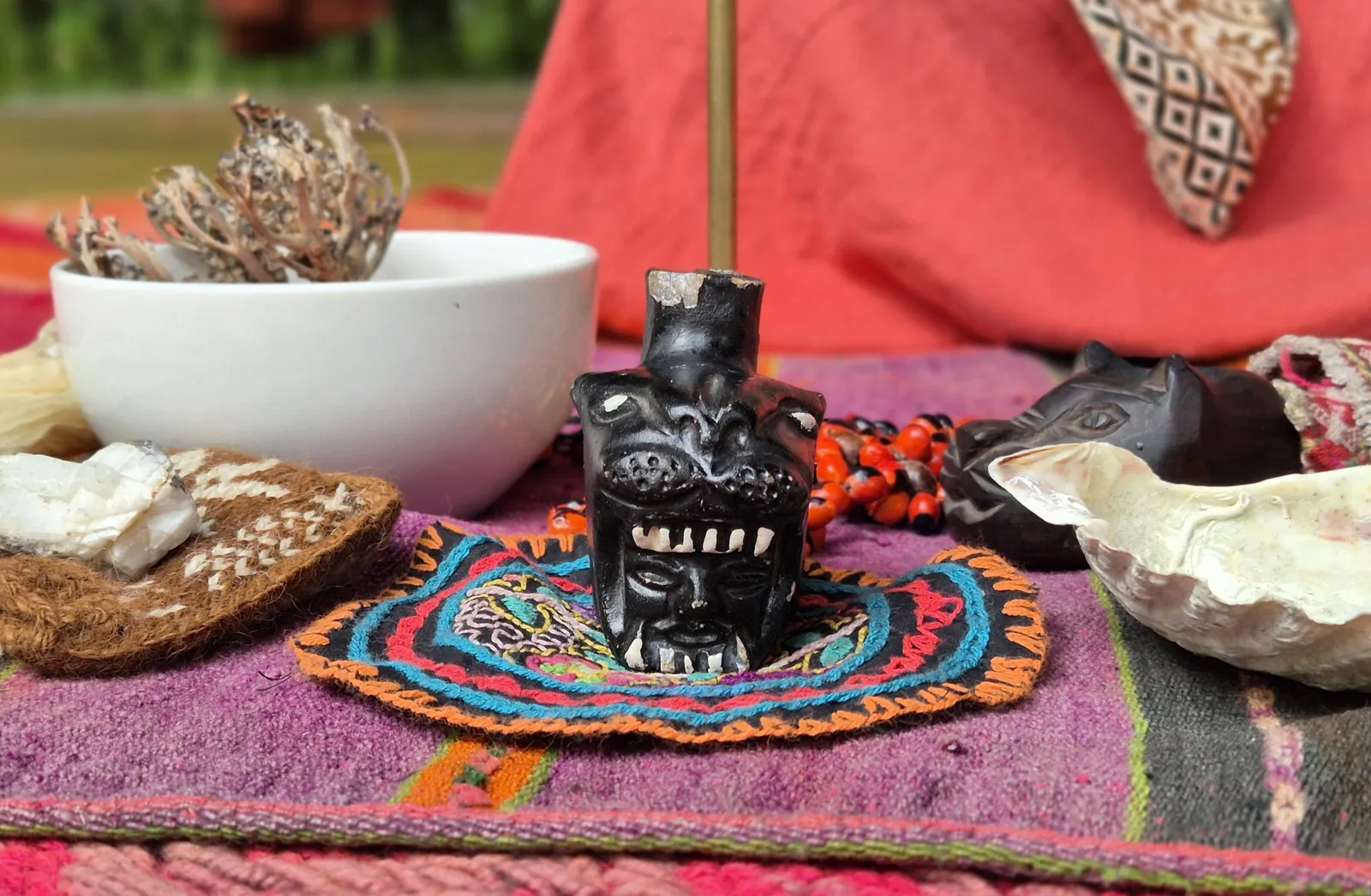
How to Prepare
Come with an open intention — something you want to release, something you want to plant, something you want to give back. You don't need to arrive with the exact words. The ceremony will help you find them.
No experience is necessary. You will be guided through every step.
The despacho asks only one thing: that you are present for what you place into it.
Ceremonies involving medicinal tobacco and drum journeying go deeper and ask more of you. Come rested, come prepared. For preparation guidelines specific to medicinal tobacco, see the tobacco ceremony page.
Forberedelser
Kom med en åpen intensjon — noe du vil slippe, noe du vil plante, noe du vil gi tilbake. Du trenger ikke komme med de rette ordene. Seremonien vil hjelpe deg å finne dem.
Ingen erfaring er nødvendig. Vi guider deg gjennom hvert steg.
Despachoen ber bare om én ting: at du er til stede i det du legger inn i den.
Seremonier med medisinsk tobakk og trommereise går dypere og krever mer av deg. Kom uthvilt, kom forberedt. For forberedelser knyttet til medisinsk tobakk, se tobakksseremoni-siden.